One of the most frequently asked questions I hear about garden design is “
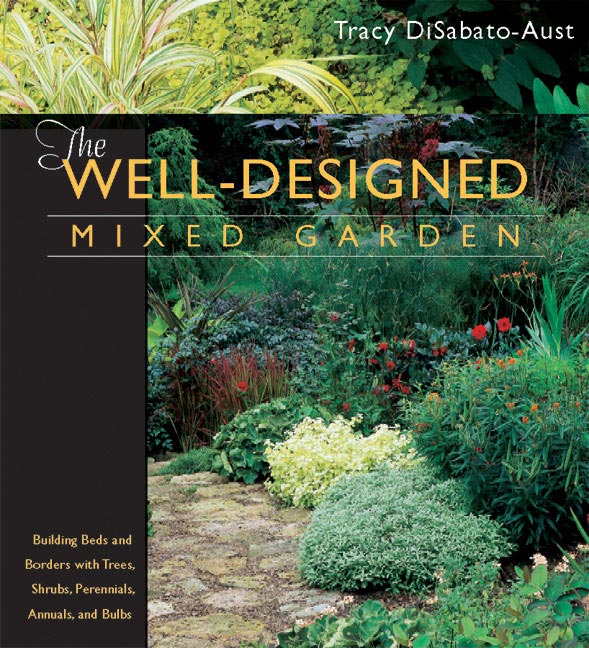
 Where do I start?”. Any new venture… be it a new exercise program, a new writing project (blog?), or a new garden can cause us to freeze in our tracks. And revamping a pitiful existing garden can be even more overwhelming. So how can we get beyond the fear (Garden Design You are Not The Boss of Me!!) and enjoy this rewarding highly creative, artistic adventure? Any time we have a mapped out plan we seem to be able to “take on” whatever life throws us. Follow the steps below for success with your new or existing garden design. I go into great detail on this in Chapter 2 of The Well-Designed Mixed Garden .
Evaluate your Site: Light? – What are the light conditions, sun/shade/part shade. Soil?-The “root” of the issue, 80% of all plant problems relate to poor soil. Test the soil for texture, nutrients as well as organic matter content. Moisture-Wet,Dry? Now what hardiness zone you are gardening in? Winds? Contour of Land? Microclimates? Existing vegetation?
Consider your Objectives – How much time do you have to garden/ do maintenance in the garden? Be HONEST! The garden should be comprised of 70% lower maintenance plants if you want a life outside the garden. (High-Impact/Low-Care Plants!!) What is your budget? What style is you or reflects your home/location to create a sense of place.

Where will the garden be located for best enjoyment: outside a prominent window? 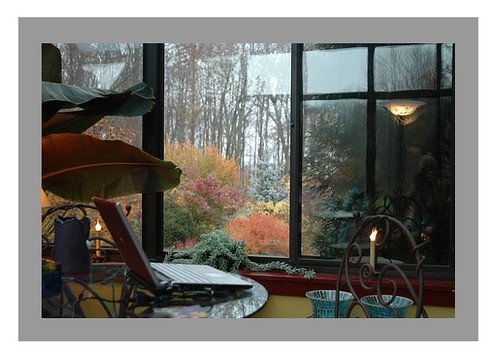 Will it be a free standing bed or will it be bordered by the house or a fence? How big should it be? (this goes back to how much time you have to work in the space—don’t get carried away with the size!!)
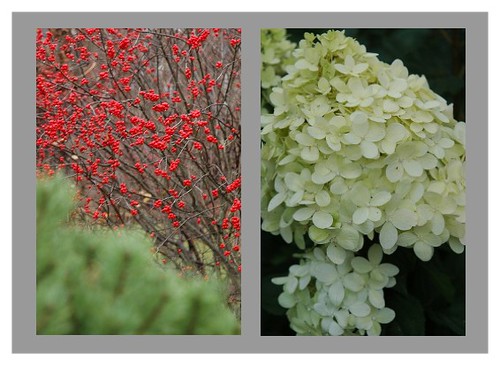
How will the Garden function? Will it be used for entertaining, meditation and at what time of the day? For cut flowers, fresh produce or to attract birds and butterflies? (photos below: attracting birds =Winterberry Holly/cut flowers=Limelight hydrangea)
What will be your Color Choices? And consider Texture and Form! Do you want a limited color palette that will project a more sophisticated look or perhaps a bit of every color which is more playful and great for lively entertaining spots. Will cool colors be selected for a peaceful feeling and to make the area appear larger or will hot colors rule to create a more “up-beat” tone? (Photos: hot=Blue Billows Hydrangea, autumn color/Cool=Endless Summer Hydrangea) Will fine textures dominate to create softness or will bold textures and forms be selected to make an architectural statement?

Pick a Peak Season of Interest
Even though a well-designedmixed garden will have a long season of interest if colors, textures and plants are properly selected it’s still important to pick a season for each border or garden—when it will really “sing!”. For example you may want a winter garden to enjoy from a window or a spring border that you walk by daily. Once you have your season then go for plants that look their best at that time of the year. (photo: autumn/winter peak season of interest for this shrub border)
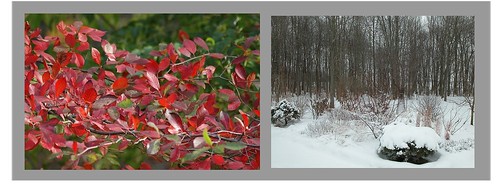
Plant Selection The moment we’ve all been waiting for…but see how many things we had to consider before this step. Contrary to walking into a garden center, impulsively selecting a cart-load of plants, and then coming home and walking around the garden wondering where they sho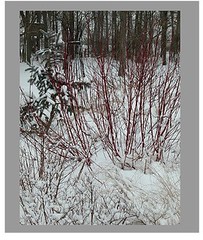 uld go (we all do this and support groups will soon be forming!!!). Remember FOCUS!! All of the above points come into play in selecting the right plants for the site, based on your maintenance needs, function, color/texture/form choices and season of interest. (Photos: For this border I selected plants for autumn/winter interest such as Midwinter Fire Dogwood and a Black Tupelo stands gracefully just outside the border.
You can do this—have fun with the process!!!
 Recently I had the opportunity to be a guest on Joe Lamp’l’s



 One of the most frequently asked questions I hear about garden design is “
 Where do I start?”. Any new venture… be it a new exercise program, a new writing project (blog?), or a new garden can cause us to freeze in our tracks. And revamping a pitiful existing garden can be even more overwhelming. So how can we get beyond the fear (Garden Design You are Not The Boss of Me!!) and enjoy this rewarding highly creative, artistic adventure? Any time we have a mapped out plan we seem to be able to “take on” whatever life throws us. Follow the steps below for success with your new or existing garden design. I go into great detail on this in Chapter 2 of The Well-Designed Mixed Garden .
 Will it be a free standing bed or will it be bordered by the house or a fence? How big should it be? (this goes back to how much time you have to work in the space—don’t get carried away with the size!!)


 uld go (we all do this and support groups will soon be forming!!!). Remember FOCUS!! All of the above points come into play in selecting the right plants for the site, based on your maintenance needs, function, color/texture/form choices and season of interest. (Photos: For this border I selected plants for autumn/winter interest such as Midwinter Fire Dogwood and a Black Tupelo stands gracefully just outside the border.
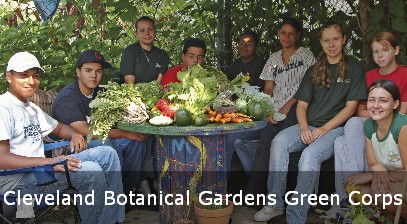 I was also “over- the- top impressed” with The Cleveland Botanical Garden’s cool urban youth program call Green Corps. It’s a work/study program for students aged 15-18 who earn as they learn by transforming vacant lots into flourishing urban farms. The students grow fruits, vegetables and flowers while also learning job and leadership skills, while being proactive in creating a healthier greener community for themselves and their neighbors. Students learn about sustainable urban farming, ecology, and healthy eating and growing as well as basics of entrepreneurship and sales. They sell their produce at farmer’s markets and bottle their own Ripe From Downtown® salsa. Let me tell you first hand it’s delicious!! Check out the Cleveland Botanical Garden at
![Reblog this post [with Zemanta]](http://img.zemanta.com/reblog_e.png?x-id=5d7d9a51-da96-4481-ad93-e074b409782c)
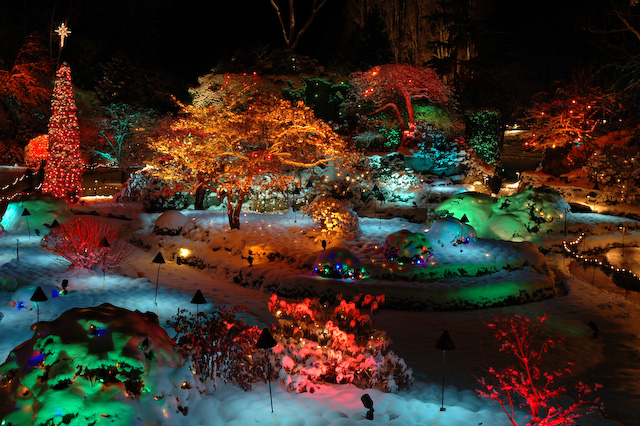 Are you feeling the chill of winter? It’s only 9 degrees this morning in Sunbury, Ohio and promises to be even colder the next couple days. Friend and collegue Dr. Rosemarie Rossetti, shared this
  ast evening. Butchart Gardens is one of the most spectacular gardens I’ve ever visited during the growing season. Who would have thought it would look so incredible with night lighting and snow? I hope this will inspire you to continue to enjoy your garden this time of year even if you can’t work in it. It’s a great time to see the play of forms in the space and just you may realize you need more evergreens to hold the design integrity throug the winter. Enjoy the images of Butchart, bundle up, and grab your cameras and tripods and try a bit of winter night photography in your garden!
 Recently I had the pleasure of visiting the New York Botanical Garden with close friend and fellow author, Denise Adams. It was a blustery day but my spirits were lifted when I saw numerous plants, that I feature in my new book